
Why Legacy Waterworks Keeps a Heat Pump Water Heater on the Truck
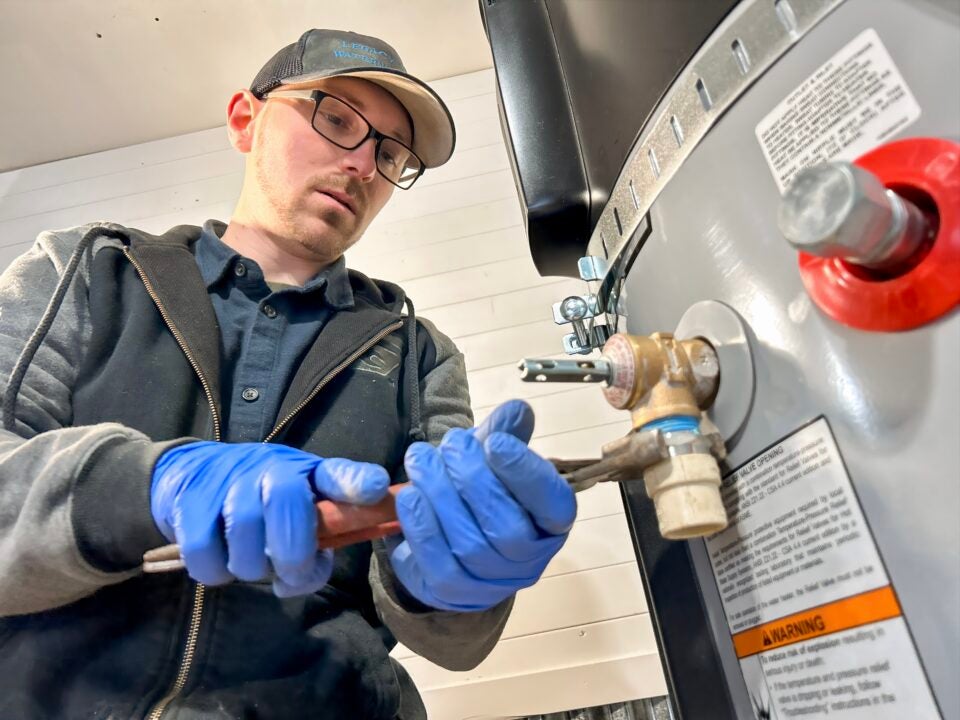
Legacy Waterworks owner James Mills keeps a heat pump water heater on his service truck so he can offer customers an efficient option when they need a replacement fast.
Key takeaways:
- Keeping a heat pump water heater (HPWH) on the truck makes it easier for James Mills of Legacy Waterworks to be more responsive to customer needs and offer an efficient option during service calls.
- Installer confidence and product knowledge are key to helping customers understand whether a HPWH is the right fit.
- Clear communication about upfront costs, rebates, and savings helps customers make informed decisions about whether or not a HPWH is the right choice for their home.
- Stocking HPWHs can help contractors offer more solutions, differentiate their business, and make HPWHs an option in emergency replacements or time-sensitive situations.
Legacy Waterworks’ focus on efficient solutions
In 2024, journeyman plumber James Mills started Legacy Waterworks, a Portland-area company that serves residential and commercial customers and offers water heater replacement and repair, including HPWHs.
“After doing my apprenticeship, I decided to step up and start the company and reputation I wanted, said Mills. “I wanted a company built on quality work and clear expectations, as it makes a big difference to customers. I wanted to provide as many solutions as possible to them.”
Mills considers open communication a key differentiator for his company. By providing his customers with a variety of options, he can help them find the best long-term fit. Setting expectations early in the process can ensure the right choices are made, whether customers are dealing with an emergency or planning a proactive replacement.
Building experience with heat pump water heaters
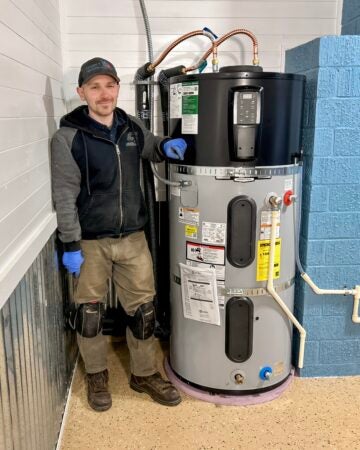 Mills heard about HPWHs through his work but became more interested in the technology after conversations with another plumber who had learned about them while working on a project with Energy Trust of Oregon. Their experience with rebates and incentives helped Mills see heat pump technology as a compelling option for customers.
“In fact, in some of the earlier days, some customers were pushing me,” Mills laughed. “Like, ‘Hey, what about this HPWH? What’s this?’ You know, and at that point, I didn’t know about it.”
As he gained more experience with HPWH installations and training, Mills became increasingly interested in making them a readily available option for customers.
“I spent time learning how they work, and thought, ‘you know, this would be a really good thing to start offering to customers.’ And I’m not pushing something they don’t want, but the option of a heat pump water heater is not brought up, frankly enough, as it can cost a customer thousands of dollars to not have a HPWH. It should be an option.”
When determining whether a HPWH is a good fit, Mills considers factors such as installation space, household needs, upfront cost, and available rebates. He talks through these considerations with the customer, allowing him to offer the technology without suggesting it is the only solution for every homeowner.
“My company is all about how I can bring more value to my customers as a plumber,” said Mills, “so if I’m only presenting 75% of the available solutions, that’s leaving a quarter of their options off the table.”
Confidence comes with experience
When utilities began rolling HPWH programs out, Mills observed that some installers were hesitant, in part because the product introduced additional installation considerations and required contractors to learn something new. He knew it would be a disservice to his customers if they missed out on heat pump water heaters simply because it required him to understand the product.
“It’s easy to just slap something in and be on to the next call,” Mills noted, “but it’s really a disservice to the customer if you don’t let them know, and don’t give them the choice.” Mills is candid about the learning curve with HPWHs, and while he sees how it could be a barrier, he believes it is worthwhile when contractors understand the long-term value HPWHs can provide their customers. Building that knowledge also makes a difference in how installers present the technology to customers.
“It’s personal grit. It requires an eagerness to learn about different technologies and a big part of it is the installer’s confidence,” said Mills.
An efficient solution when it matters most
The bigger challenge in presenting options to customers came during emergency replacements. When a water heater fails, customers need a replacement quickly—and the products available in the moment often determine what gets installed. If a conventional water heater is the only type of product ready to go, then the customer typically takes what they can get in the moment, rather than waiting for something else and not having hot water.
But by keeping a HPWH on Legacy’s service truck, Mills can offer an efficient alternative without asking the homeowner to wait for another appointment or special order. “I’ve got a bigger box truck, a 2016 Ford Transit with a 15-foot box. The HPWHs are a little bit bigger, but not unmanageable. I keep a HPWH on there, and then a couple other water heater types, so that I can provide a solution reasonably faster than trying to go out and get one at the shop…you can’t fit them all in there, but I try to have HPWHs on hand so that if the situation arises, it’s right there,” he said.
Mills has seen firsthand how that availability shifts the customer conversation toward the more efficient option. Mills can explain the heat pump technology, walk through available rebates, and discuss the benefits. Even when the upfront cost is higher, this gives customers the opportunity to weigh it against potential energy savings, available incentives, and immediate availability.
Helping customers compare their options
 Mills has found that many customers have questions about energy efficiency, upfront costs, and how HPWHs compare with their existing water heater.
“If I was a customer, where would I look to get this information? That’s what I’m trying to provide them—really showing them how much extra a year they’d be paying.” Mills says. “And if the customer says, ‘No, no; I really want that resistance one. I like paying more.’ You can be like, ‘Absolutely. I always want to do what my customer wants. Let me go hunt one of those down for you.’ and just install that.”
To address common questions, he leaves homeowners with a detailed flyer showing energy costs for standard electric resistance water heaters vs. HPWHs, and follows up with additional information by email. He also makes a point of introducing HPWHs even when the customer did not initially ask about them. “Taking just an extra ten or 20 minutes to really walk them through what a HPWH does, this is what you might expect, step by step—it makes a really big difference to customers.”
From specialty product to routine replacement
For Legacy Waterworks, keeping a HPWH on the truck is about making a more efficient option practical in the moment customers need it most—backed up by clear communication about how a HPWH will benefit them. Mills hopes other contractors will see that making HPWHs readily available can help make them a routine replacement option, while giving plumbers another way to provide value to their customers.
“To anybody who wants to increase their sales up to double, or anybody who wants to save their customers money, yes. I would do everything I could to facilitate HPWHs. It’s good for the customer, it’s good for the company. It’s a win-win.”