
Heat Pump Water Heater Maintenance: What Installers Are Responsible For
For most plumbers, maintaining a heat pump water heater doesn’t require HVAC expertise. It’s largely the same work you’re familiar with, and manufacturer support is available when deeper diagnostics are needed.
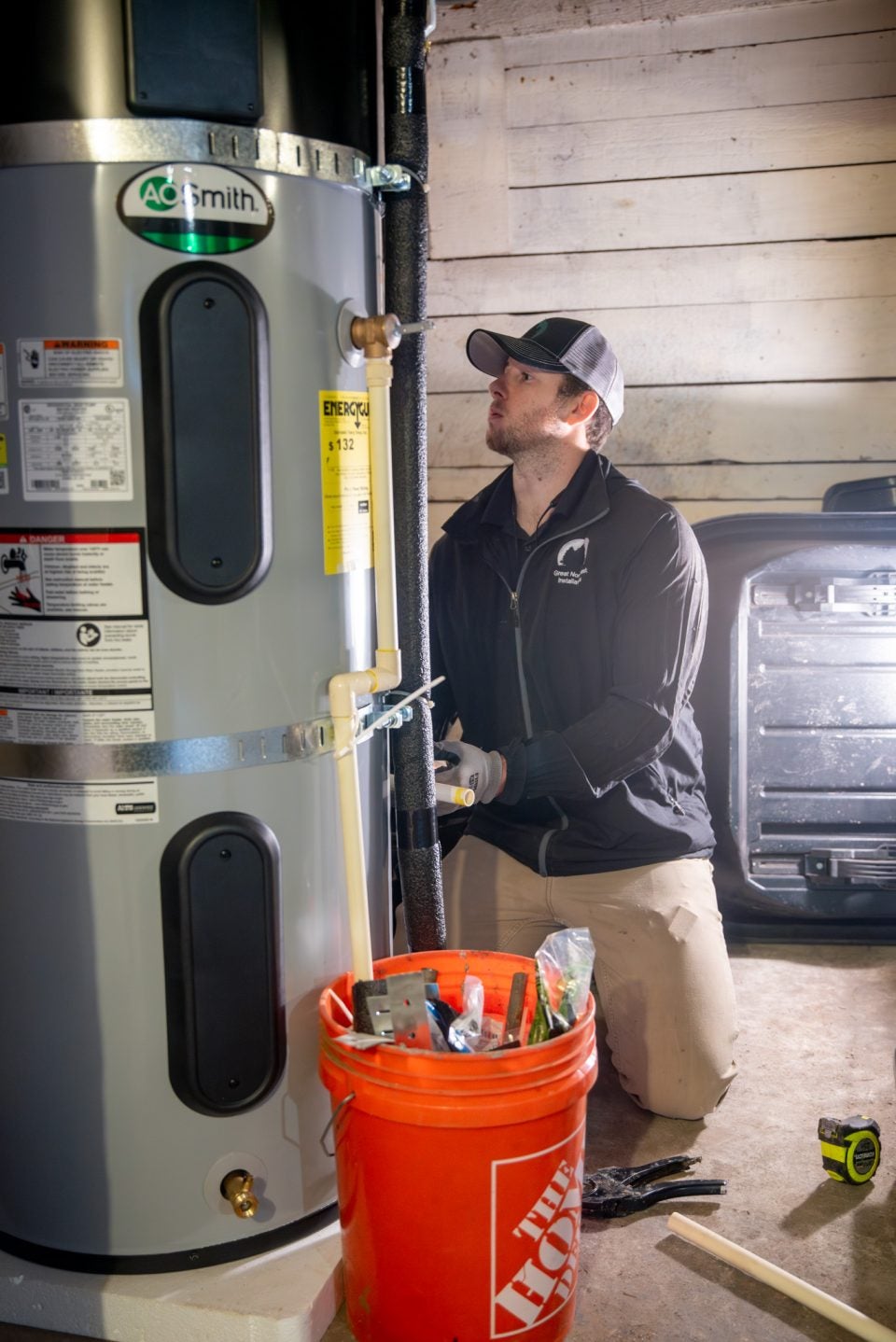
In Hot Water Solutions’ trainings and conversations with installers, one question comes up regularly: What parts of heat pump water heaters am I expected to service, and what parts am I not?
A heat pump water heater, or HPWH, is simply a standard electric resistance water heater with a heat pump placed on top—but the presence of refrigerant and the heat pump unit can make these systems seem more daunting to install and repair.
In practice, however, most contractor maintenance looks very similar to what plumbers already handle on a traditional water heater. The key is to remember that the installer’s responsibility ends at the manufacturer’s sealed refrigerant system.
Typical Installer Maintenance
It might help to think of a HPWH like a refrigerator. Installers don’t service the refrigeration loop inside a refrigerator—that system is sealed at the factory, so if it fails, the solution is typically replacement under warranty, rather than repair in the field.
The heat pump portion of a HPWH works similarly: the system moves heat from the surrounding air into the water tank using a refrigerant loop. That loop, including the compressor and refrigerant lines, is not designed to be opened or serviced by installers.
For most plumbers, this means you are not expected to perform HVAC work when servicing a HPWH. If a failure occurs within that refrigerant system, it is typically handled through the manufacturer’s warranty. Most HPWH models—everything Tier 2 and above—come with 10-year warranties on the product and a 1-year warranty on labor.
Aside from the heat pump, HPWH maintenance looks a lot like that of a conventional electric water heater. It’s still just a water heater. Troubleshooting the plumbing and electrical sides of the water heater will feel familiar and the unit will have additional sensors, controls, and error codes to help you monitor system performance.
Troubleshooting? Start With the Sensors
Modern HPWHs display error codes when the unit detects a problem. These codes are designed to help narrow down the cause of an issue.
Sometimes an error message may appear to indicate a heat pump problem when the actual cause is simpler: loose wires, disconnected harnesses, or faulty sensors can trigger errors resembling larger system failures. Checking these components is often one of the first troubleshooting steps.
Many manufacturers include basic troubleshooting guidance directly in the model’s user manual, including explanations of common error codes. Reviewing the manual and checking the sensors and wiring is often enough to identify the issue.
Manufacturer Support
If consulting the manual and basic checks don’t resolve the problem, the next step is usually to contact the manufacturer’s support team. This can help with error code interpretation, determine whether a component can be replaced in the field, and confirm whether the unit qualifies for warranty replacement.
HPWH distributors and manufacturer representatives can also be useful resources, especially as installers become more familiar with specific brands. Training programs and additional documentation for contractors may be available for contractors who regularly install certain brands.
The Bottom Line
For most plumbers, maintaining a HPWH does not require learning about HVAC systems and refrigerant. It’s mostly business as usual, focusing on the plumbing, electrical connections, and basic troubleshooting steps you already perform on conventional water heaters. When deeper diagnostics are required, HPWH manufacturer manuals, distributor resources, and technical support teams can help guide your next step.
Interested in HPWH-specific training? Request a Hot Water Solutions workshop or register for on-demand training